
Presentation to PHONZ Conference 2026
by Lou Wickham & Jayne Metcalfe
Last week we presented the findings of our study on indoor combustion for the Energy and Efficiency Conservation Authority (EECA) to the Public Health Observatory New Zealand (PHONZ) Conference 2026.
Our studyestimated the health impacts and costs associated with indoor emissions of harmful air pollutants from wood burners, gas stoves and unflued gas heaters commonly used in Aotearoa New Zealand homes.
The findings were significant and serious. This is because even small increments of exposure, when multiplied across large segments of New Zealand’s population, result in high air pollution impacts and costs.
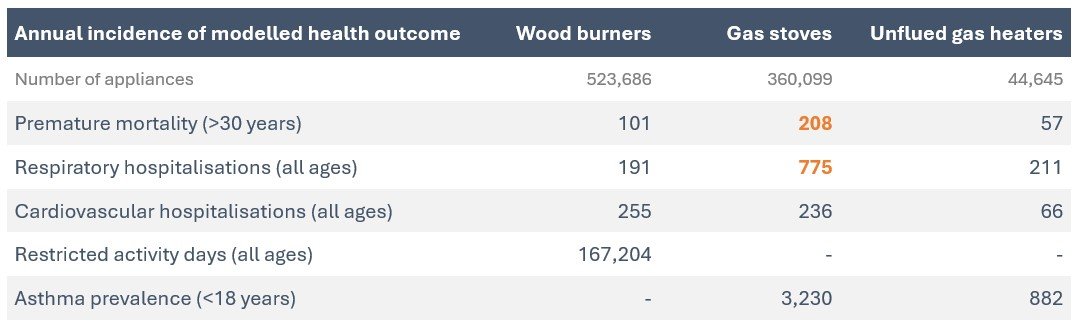
Table 1 presents the annual impacts of indoor air pollution, summed for each appliance type to provide a national estimate.
Table 1. National annual indoor air pollution health impacts (summed for each appliance type)
*All wood burner types (open fire + non-NES + NES compliant + ultra low emission + pellet burners).
Table 1 makes for some interesting comparisons between the 360,000 gas stoves with more than half a million wood burners:
The mortalities attributed to gas stoves are more than double those attributed to wood burners
The estimated respiratory hospitalisations attributed to gas stoves are more than 4 times higher than those attributed to wood burners
The table also shows the disproportionate impact of unflued gas heaters. Despite comprising only 5% of the total number of appliances, unflued gas heaters are associated with an estimated 57 premature mortalities each year. This is 16% of the total number of estimated premature mortalities attributed to indoor air pollution from all appliances.
There were also some surprise findings.
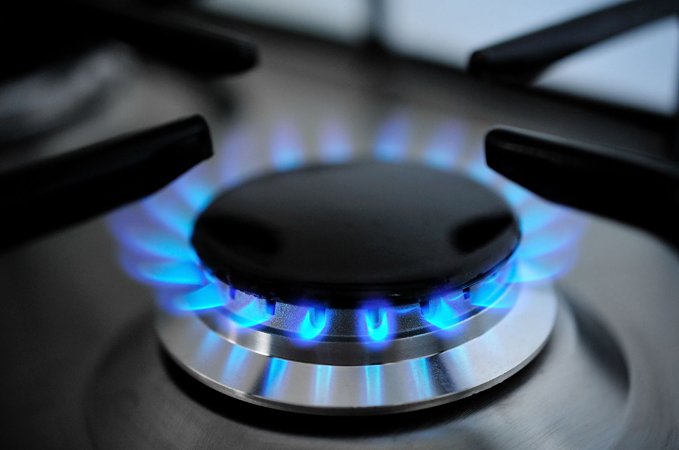
Our review found there was no association between the indoor concentrations of nitrogen dioxide (NO₂) and the presence of an extraction hood over the gas stove.
This was from two large studies;
a European study published in 2024 that monitored 180 households in 7 countries; and
a Canadian study published in 2025 that monitored 344 households across Canada.
So a key takeaway for us was to always open a window, preferably two, when cooking with gas.
(Full disclosure: we both have gas stoves at home).
For comparative purposes, we also estimated the outdoor air pollution impacts from woodburners using Treasury’s published damage costs. These assign costs to PM₂.₅ emissions discharged to the environment in $/tonne.
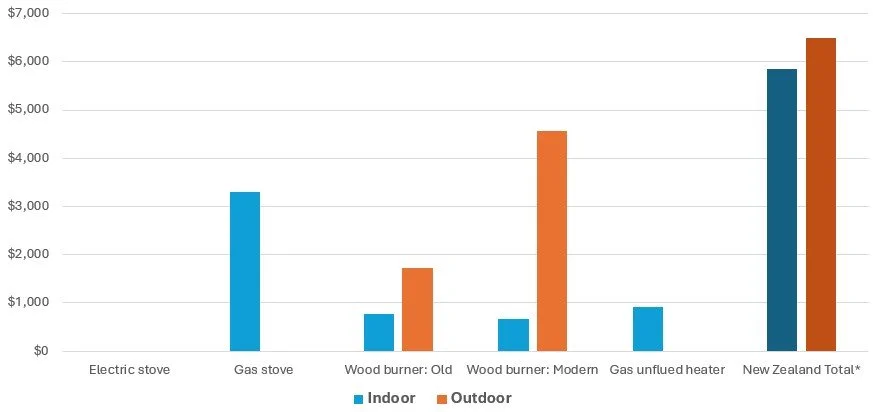
Figure 1. National indoor and outdoor air pollution costs (2025$ M/yr
*NZ Total includes ultra-low emission wood burners, pellet burners and open fires (not shown here)
Figure 1 shows that the indoor air pollution costs attributed to gas stoves is about half of the magnitude of the outdoor air pollution costs attributed to all wood burners.
It also shows that the annual health impacts and costs of indoor and outdoor air pollution attributed to these appliances are roughly the same; around $6 billion each.
This is a combined national air pollution cost to society of more than $12 billion in health impacts – each year.
The study included sensitivity analysis, which found that the estimated impacts range from 1/3 to twice the central estimates. This reflects the complexity and variability of indoor air pollution which varies from house to house. However, regardless of the assumptions and uncertainties, the costs per household are still appreciable for all appliances assessed – even at the lower bound.
We think the findings support better ventilation and increased regulatory attention to indoor air quality.
New Zealand is not alone in this regard - whilst studies in the US and the EU have made similar findings, governments anywhere have yet to act decisively. However, the cities are leading the way. We were very pleased to hear that the City of Sydney recently banned gas stoves in new builds.
Study release
The study was widely reported in New Zealand media:
with supportive press releases by NZ Green Building Council and Rewiring Aotearoa.
The study generated media interest both here and overseas.
It was even picked up by The Guardian! (which we were very happy about).
Less happy was the NZ Gas Industry Association, who commissioned their own external peer review and published their own advisory note on the study. Interestingly, GasNZ considers gas stoves to be different to unflued gas heaters and “does not recommend” the use of unflued gas heaters indoors, noting that unflued gas heaters “release combustion products directly into the room”.
We note that gas stoves also release combustion products directly into the room and a key finding of our study was that extraction hoods do not appear to reduce indoor levels of NO₂.
Conclusions
Our study estimated around 300 premature mortalities and around 1,700 hospitalisations per annum can be attributed to exposure to indoor air pollution from gas stoves, woodburners and unflued gas heaters in New Zealand homes. These health effects are serious and are due to small individual increases in chronic exposure that, when multiplied across the population, sum to a highly significant impact and cost.
EECA published our study and responses to external peer reviews (there were 3) on their website here. We welcome your questions and feedback!


Our PHONZ Conference 2026 presentation is online here.